Large Format Slabs
Large format porcelain slabs from 800 by 1600 millimetres upward, including book-matched vein designs, supplied with the packing, handling and flatness control the format demands.
At a glance
- 800x1600 mm, 900x1800 mm and larger slab formats
- Book-matched and continuous-vein marble designs
- Flatness and warpage controlled for lippage-free laying
- A-frame and specialist crated packing
- Suited to floors, walls, cladding and worktops
Why large format changed tile specification
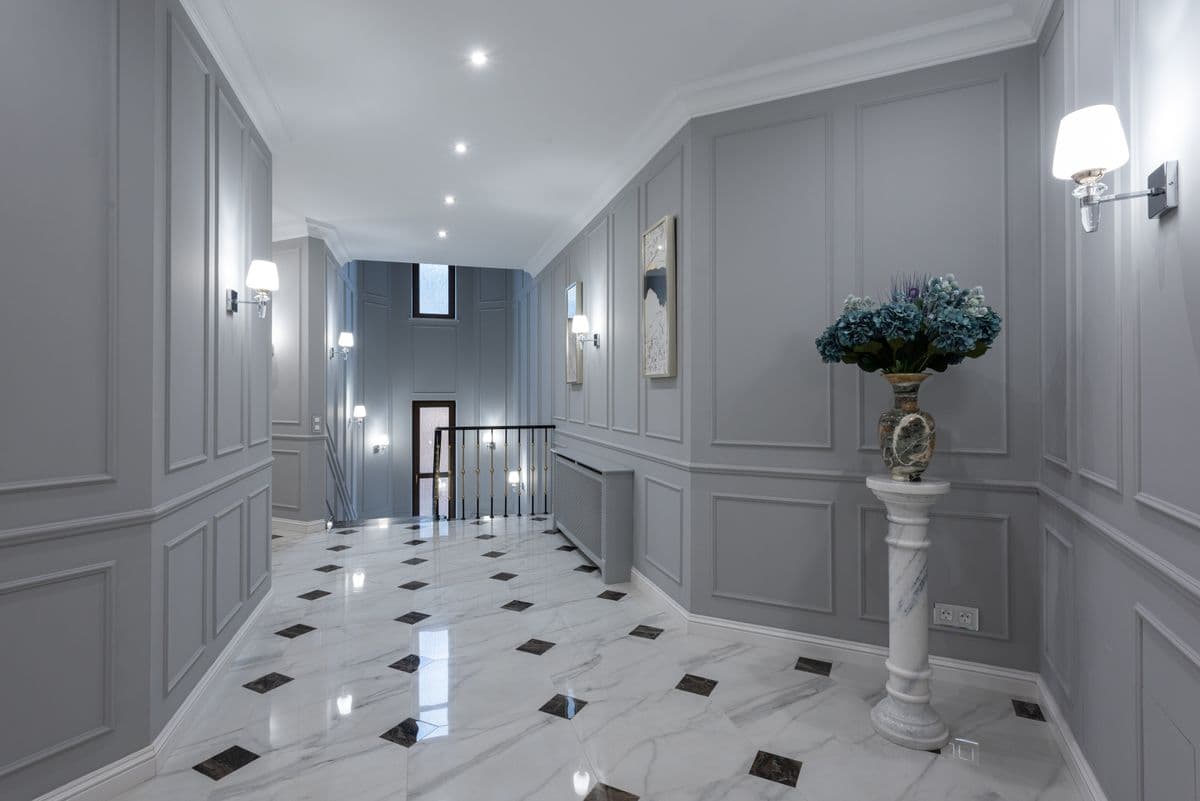
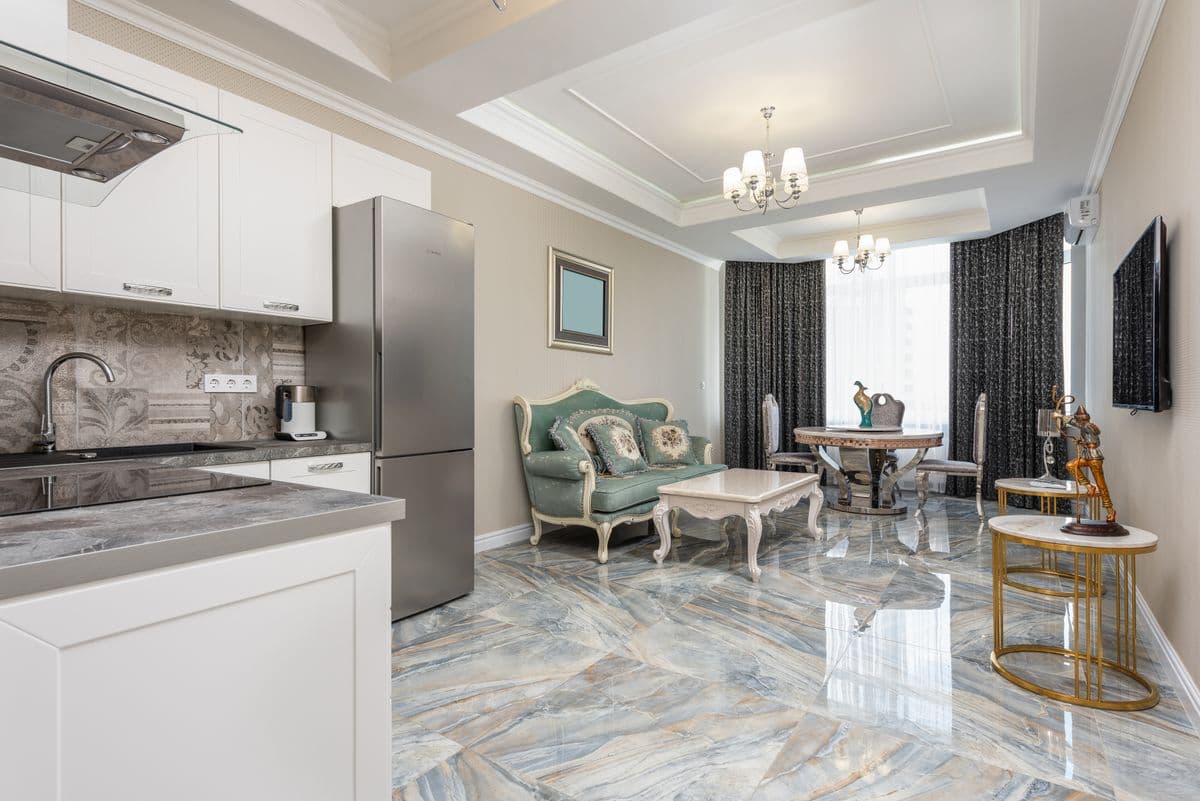
Large format porcelain slabs exist to solve a visual problem: joints. A marble-look floor laid in 600 millimetre tiles reads as a grid of tiles; the same design in 1600 or 1800 millimetre slabs reads as a stone surface. Fewer joints also mean less grout to discolour, fewer edges to chip and a more hygienic surface, which is why large formats have moved from a design novelty to a mainstream specification in hospitality, retail and premium residential work.
Morbi's plants have invested heavily in large-format presses and digital decoration, and India is now a significant global source for slabs at prices well below the traditional European suppliers. The trade-off is that large format is unforgiving in every respect - manufacture, inspection, packing, shipping, handling and installation - and buying it well requires attention that a 600 by 600 tile does not need. That is precisely where a merchant exporter with its own quality control earns its place.
We supply slabs in 800 by 1600, 900 by 1800, 1200 by 1200, 1200 by 2400 and larger formats depending on plant capability, in thicknesses from around 9 millimetres for wall and floor use through to 12 millimetres and above for heavy-duty and worktop applications, and in thin panel form for overlay and cladding. Finishes include matt, polished, satin, lappato and structured.
Design, book matching and continuous vein
The most valuable large-format products are those that reproduce natural stone convincingly, and the technique that makes it work is book matching. In a book-matched pair, two slabs carry mirrored versions of the same vein pattern so that when they are laid edge to edge, the veining runs continuously and reflects symmetrically, exactly as sawn stone from the same block would. Four-piece and multi-piece matched sets extend the effect across a larger wall.
Book-matched material has to be handled as a matched set from the plant to the wall. Slabs must be produced in sequence, packed in sequence, marked with their position in the set, and installed in that sequence. If a set is broken up in the warehouse or the sequence marking is lost, the visual effect is gone and the premium paid for it is wasted. We mark sequence on every slab and on the packing, and we state on the packing list which slabs form a set.
Continuous-vein designs work on a similar principle without mirroring: the pattern runs across multiple slabs in sequence, so a floor or wall reads as one continuous piece of stone. These designs place particular demands on print registration and dimensional accuracy, since a small dimensional error accumulates visibly across a run of large slabs.
Beyond stone reproduction, large formats are used for concrete and cement visuals, terrazzo, metal and oxidised effects, fabric and plaster textures, and solid colours where a minimal joint-free surface is the design intent. Slabs are also used as worktops, splashbacks, table tops, vanity tops, shower trays and wall cladding, and each of those uses has its own edge-finishing and thickness requirement.
Flatness, warpage and dimensional control
On large formats, flatness is the specification that matters most. A slab that is slightly bowed or twisted produces lippage at the joint, and because the joint is long, a small deviation is visible along its entire length. We measure flatness and warpage on sampled slabs against the applicable standard and treat a warpage failure as a rejection rather than a cosmetic note, because there is no way to install a warped slab well.
Edge straightness and rectangularity are equally critical. A rectified slab with a marginally bowed edge produces a joint that opens and closes along its length, which on a 1600 or 2400 millimetre edge is impossible to hide. We verify straightness, rectangularity and thickness variation across the slab, and on book-matched and continuous-vein material we additionally verify that dimensional consistency is maintained across the set, since accumulated error destroys the pattern continuity.
Surface and print inspection covers the same defects as smaller formats but at a scale where they are far more visible: print registration and alignment relative to the slab edge, colour saturation consistency across the slab, banding, nozzle dropouts, glaze pinholes and inclusions, and polishing defects such as orange peel, dull patches and edge burn on polished finishes. Because the slab is large, every defect is examined at close range across a big area rather than sampled on a small tile.
Breaking strength and thickness adequacy are verified relative to the format. A large slab is subject to significant bending stress in handling and installation, and an under-thick slab for its size will break in transit or on site. We match thickness to format and application rather than accepting the thinnest available option, and we state clearly when a thin panel requires a fully bonded substrate and specialist handling.
Packing, handling and transit protection
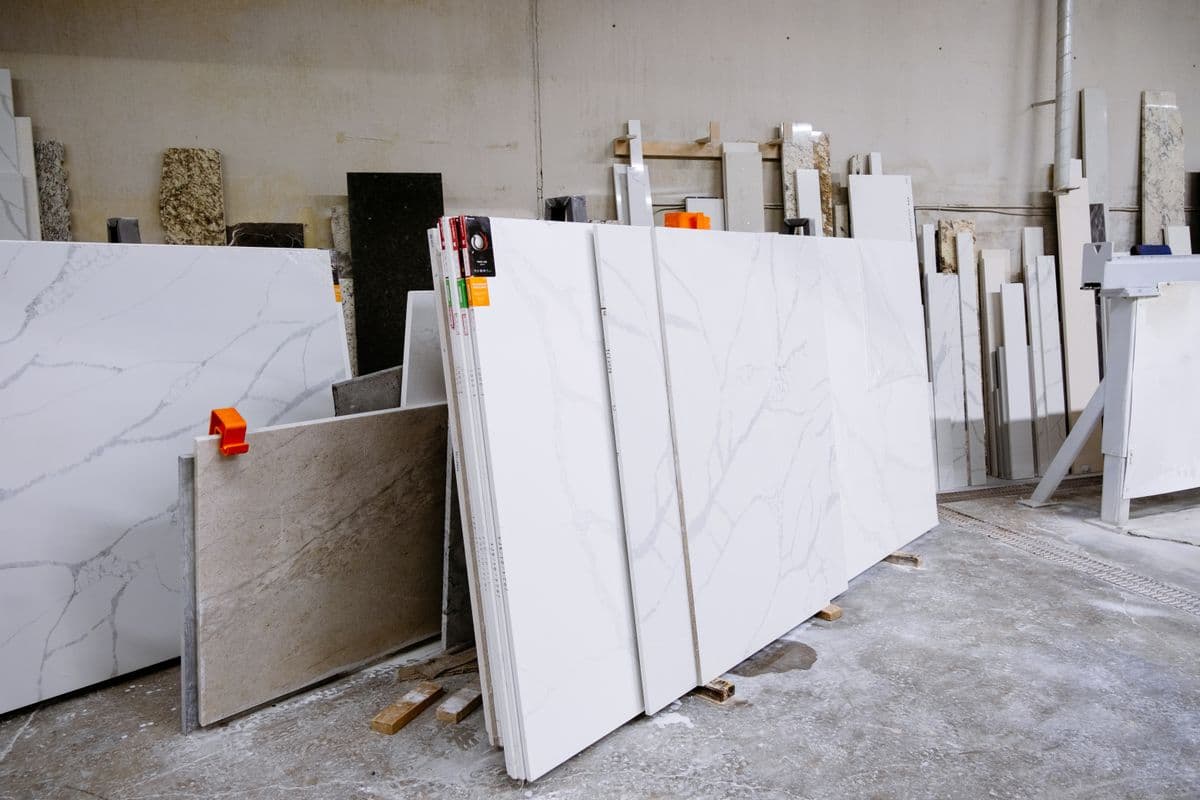
Large slabs cannot be packed like tiles, and the packing is a large part of what you are buying. Slabs are packed vertically on their long edge, never flat, in wooden A-frames or specialist crates with edge and corner protection, foam or felt interleaving between faces, and secure strapping so no slab can move or flex during transit. Packing that allows a slab to flex will break it, and a broken slab in a book-matched set breaks the set rather than costing one piece.
Crates are constructed from ISPM 15 compliant timber where required, designed so the load path runs through the frame, marked with orientation and lifting instructions, and built for the handling equipment available at destination. We ask what equipment you have on receipt, because a crate that cannot be handled with your forklift and slab clamp becomes a damage event during unloading.
Loading and stowage in the container are planned rather than left to the loader. A-frames are positioned and secured against movement, dunnage and void filling prevent shifting, and weight distribution is planned to the destination's road limits. Where a shipment mixes slabs with tiles or other products, slabs are loaded so they are not exposed to load pressure from other cargo.
Handling guidance is supplied with the shipment because much slab damage occurs after arrival. Slabs need to be lifted vertically with a suitable clamp or frame, carried on edge, never dragged, and stored vertically on a rack with support along their length. We provide this in writing and, for buyers new to the format, will discuss the required equipment before the order rather than after the breakage.
Fabrication, edge finishing and worktops
Slabs used for worktops, vanity tops, table tops and cladding require fabrication, and the requirements differ from tile installation. Cutting is done with bridge saws or CNC with a continuous-rim diamond blade and water cooling, holes and cut-outs need radiused internal corners to avoid stress cracking, and sink and hob cut-outs must be reinforced. Where a buyer's fabricator is used to natural stone, porcelain behaves differently and we say so.
Edge profiles available on fabricated pieces include mitred edges to create a thicker apparent section, polished straight edges, chamfered and bullnose profiles, and applied edge strips. Mitred edges are the standard solution for worktops because they produce a substantial-looking edge from a relatively thin slab, and they need accurate cutting and careful bonding to work.
For buyers supplying fabricated products rather than raw slabs, we can arrange cutting and edge finishing to your drawing before shipment. That reduces on-site risk and waste but requires accurate dimensions in advance, and it removes the ability to adjust on site, so we discuss which approach fits the project rather than assuming.
Installation requirements and buyer support
Large format installation genuinely requires a different method, and a large share of complaints trace to installation rather than product. The substrate must be flat within a tight tolerance, the adhesive must be a suitable class applied by both floating the substrate and back-buttering the slab to achieve full coverage, a levelling and lippage-control system is essential, movement joints must be planned, and cutting on site requires proper equipment. Laying a slab on dabs of adhesive will produce hollow areas and cracking.
We provide this information in writing with the order and will talk it through with your installer where the format is new to them. For project work we can recommend a mock-up before full installation, which is far cheaper than discovering a substrate or lippage problem across a completed floor. Where a buyer's site conditions are clearly unsuitable for the specified format, we say so.
We also advise on quantity allowance. Large format generates more waste than small format because cuts are less usable, and book-matched material must be planned rather than cut arbitrarily. The correct over-order allowance depends on the room shape, the layout and whether the design is book-matched, and we work it out with you rather than applying a generic percentage.
Documentation, testing and project submission
Slab shipments leave with a full documentation pack: commercial invoice, packing list itemising each slab with design, size, thickness, finish, batch, and sequence number where part of a matched set, certificate of origin, transport document, insurance where requested, and test reports where specified. Sequence documentation on book-matched sets is essential and we treat it as part of the product rather than as paperwork.
Testing to the ISO 10545 method series or the equivalent regional standard is arranged where the project requires it, covering water absorption, breaking strength and modulus of rupture, abrasion, slip resistance, stain and chemical resistance, frost resistance for external use, and thermal shock. For worktop applications, stain and chemical resistance and thermal shock are the tests that actually matter, and we prioritise them accordingly.
For project submissions we supply the technical data pack, physical samples, and where required a full slab or mock-up panel for approval. Lot-specific testing must be arranged before production, so we ask about submission requirements at quotation stage. Where a consultant's specification contains a contradiction - a polished slab with a wet-area slip requirement being the most frequent - we raise it before submitting rather than having the submission rejected.
Buying slabs through VP Global Exim
Large format is the tile category where buying through a merchant exporter with its own inspection makes the clearest difference. The defects that matter - warpage, edge bow, print misregistration across a set, sequence marking errors, inadequate packing - are all things that must be caught before the container is sealed, because none of them can be economically resolved after arrival.
We inspect slabs individually rather than by sample where the order justifies it, verify sequence marking on matched sets against the packing list, confirm packing construction and strapping before loading, and photograph the loaded container. Where a slab fails, it is replaced before shipment rather than credited afterwards, which matters when a missing slab breaks a matched set.
To quote, tell us the format, thickness, finish and design direction, the application including whether slabs will be fabricated, the quantity, whether book matching is required, your destination market, and the handling equipment available at your end. We will propose products with samples, quote with packing and freight planned for the format, and confirm the documentation and testing scope before production.
Large Format Slabs specifications
| Formats | 800x1600, 900x1800, 1200x1200, 1200x2400 mm and larger by plant capability |
|---|---|
| Thickness | 9 mm wall and floor, 12 mm and above for heavy-duty and worktops, thin panels for overlay |
| Finishes | Matt, polished, satin, lappato and structured |
| Designs | Book-matched and continuous-vein marble, concrete, terrazzo, metal, plaster and solid colours |
| Critical checks | Flatness and warpage, edge straightness, rectangularity, thickness variation, sequence marking |
| Packing | Vertical on long edge in ISPM 15 A-frames or crates with interleaving, edge protection and secure strapping |
| Fabrication | Bridge saw or CNC cutting, radiused cut-out corners, mitred, polished, chamfered and bullnose edges |
| Testing | ISO 10545 series: absorption, strength, abrasion, slip, stain, chemical, frost and thermal shock |
| MOQ | One 20ft container; smaller trial quantities possible when consolidated with tile orders |
| Lead time | 25-40 days from confirmed order and approved samples; longer for book-matched sets and pre-fabrication |
Made to your requirements
- Book-matched and multi-piece matched sets with sequence marking
- Pre-fabrication to your drawing with edge profiling
- Thickness and finish matched to application
- Crate design suited to your handling equipment
- Mock-up slabs and panels for project approval
- Individual slab inspection with photographic reporting
Where our large format slabs is used
Typical buyer profiles and end uses we supply into.
Large Format Slabs export questions
The questions buyers ask most often before placing a first order.
What is book matching and why does sequence matter?
Book-matched slabs carry mirrored versions of the same vein pattern so that laid edge to edge the veining runs continuously and reflects symmetrically, like sawn stone from one block. The effect only works if the set is produced, packed, marked and installed in sequence. We mark sequence on every slab and on the packing and state on the packing list which slabs form a set, because a broken sequence wastes the premium paid for it.
Why is warpage such a serious defect on slabs?
Because the joints are long. A slight bow or twist produces lippage that is visible along the entire length of a 1600 or 2400 millimetre joint, and there is no installation technique that hides it. We measure flatness and warpage on sampled slabs and treat a failure as a rejection rather than a cosmetic note.
How are slabs packed and what do I need to unload them?
Slabs ship vertically on their long edge in wooden A-frames or specialist crates with interleaving, edge protection and secure strapping, never flat. You will need a forklift with adequate capacity and a slab clamp or lifting frame, and vertical racking for storage. We ask what equipment you have before shipping, because a crate that cannot be handled at your end becomes a damage event during unloading.
Can you cut slabs to size before shipping?
Yes, we can arrange cutting and edge finishing to your drawing, including mitred, polished, chamfered and bullnose profiles. That reduces on-site risk and waste, but it requires accurate dimensions in advance and removes the ability to adjust on site, so we discuss which approach suits your project rather than assuming pre-fabrication is better.
Is large format harder to install?
Yes, materially so, and a large share of complaints trace to installation rather than product. It needs a very flat substrate, a suitable adhesive class applied by both floating and back-buttering for full coverage, a lippage levelling system, planned movement joints and proper cutting equipment. Laying slabs on adhesive dabs produces hollow areas and cracking. We supply written guidance and will talk it through with your installer.
How much extra should I allow on a slab order?
More than for small format, because slab cuts are less reusable and book-matched material must be planned rather than cut arbitrarily. The right allowance depends on room shape, layout and whether the design is matched, so we work it out with you rather than applying a generic percentage. Running short on a matched set is a particularly expensive mistake.
Request a quote: Large Format Slabs
Send your specification, quantity and destination market. We confirm feasibility, quote with a lead time and propose a sampling plan so your first order is judged on an approved sample.
- Response within 24 hours
- Samples before bulk commitment
- Full export documentation handled
Enquire about Large Format Slabs
Pre-filled for this product - just add your details.