Outdoor / Parking
Heavy-duty anti-skid tiles and pavers engineered for vehicle loading, weather exposure and public traffic, with slip and frost performance verified rather than assumed.
At a glance
- Anti-skid surfaces with verified R rating or friction value
- Vehicle-rated thickness including 20 mm pavers
- Frost-resistant options for freeze-thaw climates
- Parking, driveway, terrace, pathway and pool-surround ranges
- Test reporting for slip, frost and breaking strength
Exterior tiles are a performance purchase
An outdoor tile has to survive conditions that an interior tile never meets: standing water, freeze-thaw cycling, ultraviolet exposure, thermal movement, chemical attack from de-icing salts and vehicle fluids, abrasive grit underfoot and, in parking applications, point loading from vehicle wheels. Every one of those is a failure mechanism, and an outdoor tile selected on appearance rather than on tested performance is a tile that will fail. VP Global Exim specifies exterior tile against the actual exposure and verifies the properties that matter.
The range covers heavy-duty parking tiles designed for vehicle traffic, anti-skid floor tiles for terraces, balconies, pathways and pool surrounds, 20 millimetre porcelain pavers for dry-laid and pedestal installation, structured and textured porcelain for external walking surfaces, cladding and facade tiles, and step, riser and nosing pieces with slip-resistant surfaces. Designs run from utilitarian to stone, wood and concrete visuals.
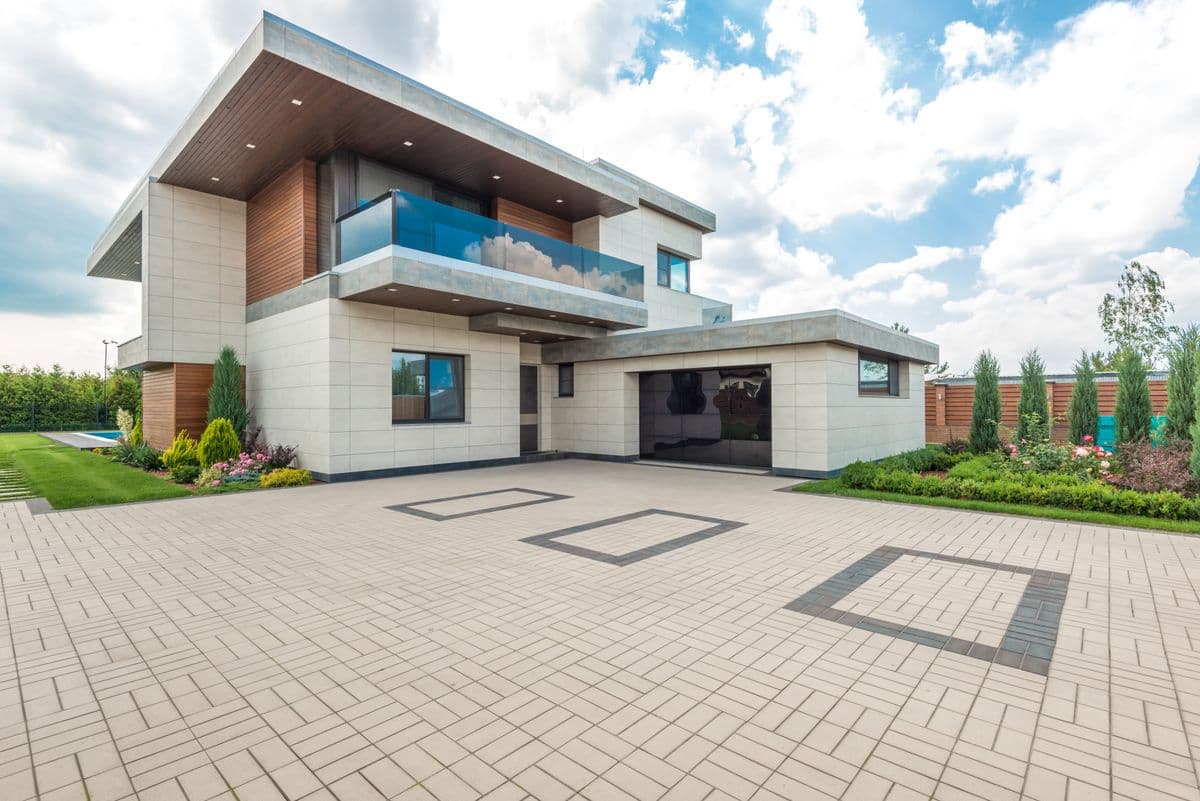
The applications we supply into are mostly residential driveways and terraces, apartment podium and car-park decks, commercial forecourts and service yards, public walkways and plazas, hotel pool surrounds and outdoor dining areas, and pathway and landscape work. Each has a different combination of load, slip and weather requirement, and the right product differs accordingly.
Slip resistance specified properly
Slip resistance is the property most often specified badly and the one with the most serious consequences, since a slip on a wet public surface is a liability event rather than a complaint. The difficulty is that different markets use different measurement systems, and a value in one system cannot be converted to another. R ratings from the German ramp test, A, B and C classifications for barefoot wet areas, coefficient of friction values from dry and wet tests, and pendulum test values all describe slip resistance in incompatible terms.
We therefore ask which system your market or specification uses and supply test evidence in that system rather than quoting a figure in whatever system a plant happens to hold. Where a project specification names a required value - an R rating for a walkway, a barefoot classification for a pool surround, a pendulum value for a public area - we route production to a plant that can supply testing against that method and provide the report.
Achieving slip resistance involves a trade-off that should be stated openly. A more aggressive texture gives better wet grip but is harder to clean, collects dirt and can be uncomfortable underfoot in bare feet. A smoother anti-skid surface is easier to maintain but offers less margin. For a pool surround the balance sits differently than for a service yard, and we discuss it rather than defaulting to the most textured option available.
Slip resistance also changes over time. Polishing under traffic, accumulation of contaminants and wear all reduce it, and cleaning regime affects it substantially. We advise on realistic maintenance and, for public and commercial applications, recommend specifying with margin above the minimum required value rather than exactly at it.
Load capacity and parking applications
Parking and driveway tiles carry vehicle wheel loads, which are concentrated point loads far higher than anything a pedestrian floor sees. Adequate performance depends on the tile's breaking strength and thickness together with the bedding and substrate: a strong tile laid on an inadequately compacted or unsupported base will crack regardless of its rating. We specify tile and advise on the installation requirement together, because specifying only one of them is meaningless.
For vehicle areas we supply thicker heavy-duty tiles and 20 millimetre porcelain pavers, and we verify breaking strength and modulus of rupture against the intended loading. Where the application involves heavier vehicles - delivery vehicles, service traffic, fire-appliance access routes - the requirement steps up again, and we ask about it explicitly because buyers frequently specify for cars and then find a delivery lorry using the same surface.
The 20 millimetre paver deserves specific mention because it enables installation methods that a standard tile cannot support. It can be laid on gravel or sand, on grass with a supporting base, or on adjustable pedestals over a waterproof deck, which is the standard solution for podium and roof-terrace construction. Pedestal installation also allows drainage and services beneath the surface and permits individual pavers to be lifted for access.
Drainage and falls are part of the specification rather than an installation detail. Standing water accelerates freeze-thaw damage, promotes staining and algae growth, and drastically reduces effective slip resistance. We ask about falls, drainage and whether the surface is over a waterproof membrane, because those answers change which product is appropriate and which installation method should be used.
Frost resistance and weather durability
In any climate that freezes, frost resistance is the single most important property. Water absorbed into a tile's pore structure expands on freezing, and repeated cycling spalls the surface or splits the tile. Resistance depends on porosity and pore structure and must be demonstrated by freeze-thaw cycling testing to the relevant method rather than inferred from the tile being described as vitrified or porcelain.
We insist on frost test evidence for external applications in freezing climates, and we advise on the associated details that determine whether a frost-resistant tile actually survives: adequate falls so water drains rather than pools, a bedding and jointing system that does not trap water beneath the tile, appropriate movement joints, and the use of frost-resistant adhesive and grout. A frost-resistant tile laid in a way that holds water beneath it will still fail.
Other weather-related properties are tested where relevant. Thermal shock resistance matters where a surface heats in sun and is cooled by rain. Colour fastness to light matters because ultraviolet exposure fades some pigments over years. Chemical resistance matters where de-icing salts, fertilisers or vehicle fluids will contact the surface. Stain resistance matters on any external surface that will see leaf tannins, algae, rust or oil.
Efflorescence and staining from the installation itself is a common problem that is not the tile's fault but becomes the tile's complaint. Salts migrating from bedding mortar can deposit on the surface, particularly on porous jointing. We advise on bedding and jointing specification to reduce the risk, and we point out that a low-porosity tile with the wrong grout in an exposed location will still look poor after a wet winter.
Formats, surfaces and drainage detailing
Common outdoor formats include 300 by 300 and 400 by 400 millimetre parking tiles with pronounced surface texture, 600 by 600 and 600 by 900 anti-skid floor tiles, 600 by 600 and 800 by 800 twenty-millimetre pavers, plank formats for wood-look decking effects, and small-format and mosaic products for pool surrounds and shower areas. Step treads with nosing, risers, coping and pool-edge profiles complete the range.
Surface textures range from fine grip finishes suitable for terraces where bare feet and furniture matter, through structured finishes for general external walking, to heavily textured and studded parking finishes designed for vehicle grip. We match texture to the actual use rather than to the harshest option, and we point out where a heavily textured tile will be unpleasant underfoot or difficult to clean.
Pool surrounds are a distinct application with their own requirements: barefoot wet slip classification rather than a shod R rating, comfortable texture, chemical resistance to pool water treatment, and coping and edge profiles that are safe and comfortable at the pool edge. We supply matched pool ranges including coping, internal and external corners and step profiles, and we specify the barefoot classification rather than a general anti-skid claim.
Testing, documentation and project submission
Because exterior tile is a performance purchase, test documentation is a substantial part of the deliverable. We arrange testing to the ISO 10545 series or an equivalent regional standard covering water absorption, breaking strength and modulus of rupture, deep abrasion, slip resistance in the method your market uses, frost resistance by freeze-thaw cycling, thermal shock, chemical and stain resistance, and colour fastness to light.
For project work we distinguish between a plant's generic type-test report and testing on your production lot, and we confirm which your consultant requires at quotation stage. Lot-specific testing has to be arranged before production. Where a specification names a standard we cannot meet with a suitable product at the target price, we say so rather than submitting something that will fail review.
Shipments leave with the complete documentation pack: commercial invoice, packing list with design, size, thickness, finish, grade and batch, certificate of origin, transport document, insurance where requested, and the specified test reports. Where the destination market requires conformity certification for construction products, we confirm the requirement and route production to a plant that holds it.
Packing, loading and delivery to site
Outdoor tiles are thicker and heavier than interior tiles, and 20 millimetre pavers in particular are very heavy per square metre, so weight planning dominates. Tiles are packed in export cartons or, for heavier pavers, in reduced-count cartons or on tightly strapped pallets to keep individual package weights manageable for site handling. Palletisation, strapping, wrapping and corner protection are specified, and loading is planned to the destination's legal road weight limit.
Because outdoor tile usually goes to a construction site rather than a warehouse, we plan packaging around site handling. Pallet weights are set so available site equipment can move them, pallets are built to be stable on uneven ground, and packing is weather-resistant enough to survive a period stored outdoors before laying. Where material will be stored on site for a long period, we advise on protection because tiles stored badly on a site arrive at the installer damaged and dirty.
For phased construction we plan deliveries against the programme, so material arrives when the site can accept and store it rather than sitting in a compound absorbing damage. Batch reservation across phases is agreed at order stage, because an external area completed in two phases from two firing batches will show the difference in daylight far more clearly than an interior floor would.
Specifying exterior tile with us
The conversation we need is about exposure and use, not about a product code. Tell us the application, the traffic including vehicle type and weight where relevant, whether the surface is wet in use, whether it freezes, whether it sits over a waterproof deck or on ground, what falls and drainage exist, which slip standard your market requires, the cleaning regime and the visual direction. From that we can propose products with test data and let you decide on evidence.
We will also tell you when a request is not sound. A polished tile for a pool surround, a standard 9 millimetre tile for a driveway, an untested tile for a freezing climate, or a heavily textured tile for a barefoot terrace are all requests we receive regularly, and in each case saying so is more useful than quoting what was asked for.
Samples are supplied before commitment, and for larger or project orders a trial area or mock-up is worth the time. Slip resistance and appearance both read very differently on a wet outdoor surface in daylight than on a sample in an office, and an outdoor mock-up is the only reliable way to judge it.
Outdoor / Parking specifications
| Product types | Heavy-duty parking tiles, anti-skid floor tiles, 20 mm pavers, structured porcelain, cladding, step and coping pieces |
|---|---|
| Formats | 300x300, 400x400, 600x600, 600x900, 800x800 mm, plank formats, mosaics and pool profiles |
| Thickness | Heavy-duty parking thicknesses and 20 mm pavers for vehicle and pedestal installation |
| Slip resistance | R rating, barefoot wet classification, coefficient of friction or pendulum value, tested in your market's method |
| Frost resistance | Verified by freeze-thaw cycling for freezing climates; not inferred from tile type |
| Load | Breaking strength and modulus of rupture verified against intended vehicle loading |
| Weather testing | Thermal shock, chemical resistance, stain resistance and colour fastness to light |
| Installation methods | Bonded, sand or gravel laid, grass laid on base, or adjustable pedestals over waterproof decks |
| MOQ | One 20ft container; weight-limited loads planned to destination road limits |
| Lead time | 20-35 days from confirmed order and approved samples; longer where lot-specific testing is required |
Made to your requirements
- Slip resistance specified and tested in your market's method
- Frost-resistance verification for freeze-thaw climates
- Matched pool ranges with coping, corners and step profiles
- Pedestal-installation pavers for podium and roof decks
- Pallet configuration planned for site handling
- Phased delivery with batch reservation across construction stages
Where our outdoor / parking is used
Typical buyer profiles and end uses we supply into.
Outdoor / Parking export questions
The questions buyers ask most often before placing a first order.
How should slip resistance be specified?
In the method your market or specification actually uses, because the systems are not interchangeable. R ratings from a ramp test, barefoot wet A, B and C classifications, coefficient of friction values and pendulum test values all describe slip resistance in incompatible terms. Tell us which applies and we supply test evidence in that method rather than quoting whatever figure a plant happens to hold.
Can I use standard porcelain tile on a driveway?
Generally no. Vehicle wheel loads are concentrated point loads far higher than pedestrian flooring sees, and they need heavy-duty thickness or 20 mm pavers together with an adequately compacted and supported base. A strong tile on a poor base will crack regardless of its rating, which is why we specify the tile and advise on installation together.
What makes a tile frost resistant?
Low porosity and a favourable pore structure, demonstrated by freeze-thaw cycling testing rather than inferred from the tile being called porcelain or vitrified. We insist on test evidence for freezing climates, and we advise on the details that decide whether a frost-resistant tile survives: adequate falls, bedding that does not trap water, movement joints and frost-resistant adhesive and grout.
What are 20 mm pavers used for?
They allow installation methods a standard tile cannot support: laying on gravel or sand, laying on grass over a base, and mounting on adjustable pedestals over a waterproof deck, which is the standard solution for podium and roof terraces. Pedestal installation also permits drainage and services beneath the surface and allows individual pavers to be lifted for access.
Which tile suits a pool surround?
One specified to a barefoot wet slip classification rather than a shod R rating, with a texture that is comfortable underfoot, chemical resistance to pool water treatment, and matching coping, corner and step profiles for a safe pool edge. A polished tile is never appropriate, and we will say so if one is requested.
Should I do a mock-up before a large external order?
For project work, yes. Slip resistance and appearance both read very differently on a wet outdoor surface in daylight than on a dry sample indoors, and an outdoor trial area is the only reliable way to judge both. It is inexpensive relative to the cost of relaying a public area that turns out to be too slippery or visually wrong.
Request a quote: Outdoor / Parking
Send your specification, quantity and destination market. We confirm feasibility, quote with a lead time and propose a sampling plan so your first order is judged on an approved sample.
- Response within 24 hours
- Samples before bulk commitment
- Full export documentation handled
Enquire about Outdoor / Parking
Pre-filled for this product - just add your details.