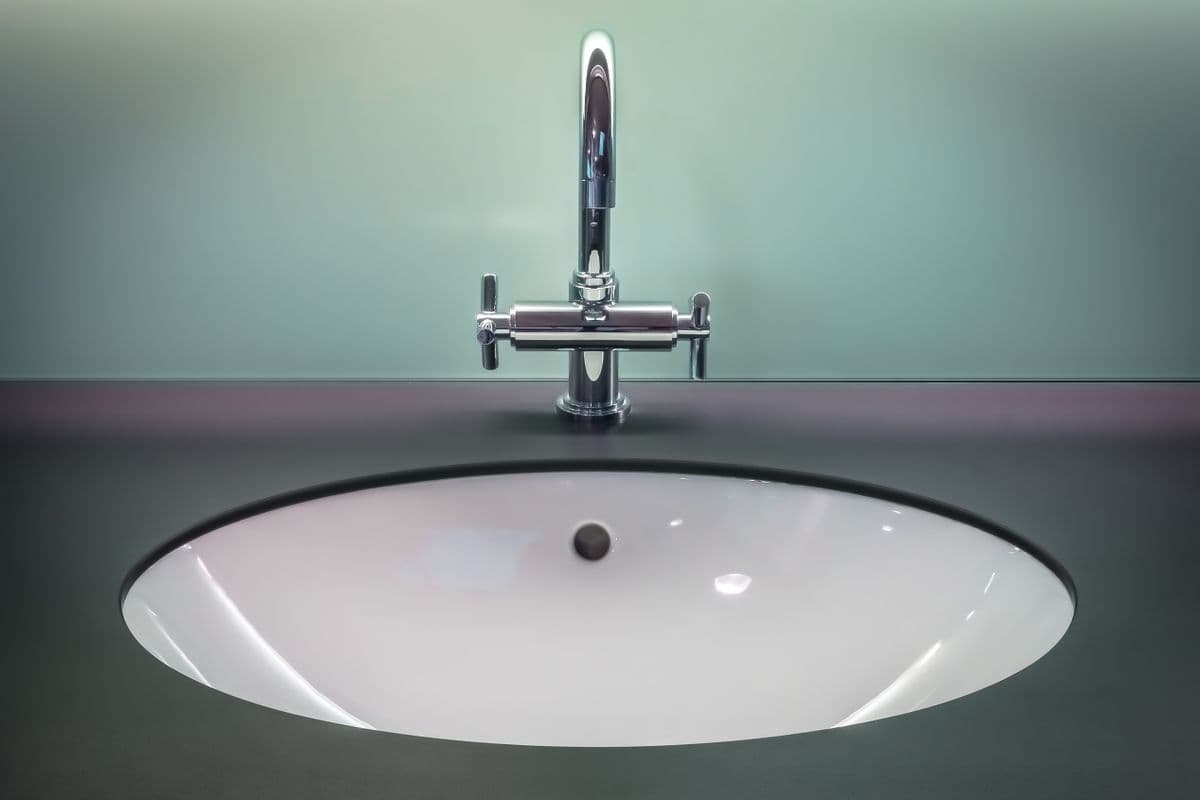
Faucets & Mixers
Brass and alloy faucets and mixers for basin, bath, shower and kitchen use, specified by cartridge quality, brass grade and finish durability rather than by appearance alone.
At a glance
- Forged and cast brass bodies with declared material grade
- Ceramic disc cartridges cycle tested to 200,000 operations
- Chrome, PVD, matt black, brushed gold and rose gold finishes
- 100 percent pressure and leak tested before packing
- Lead-free brass and potable water compliance where required
 Preview
Product brochure
VRA CP Bath Fittings & Faucets
VRA is our own brand, so its full catalogue downloads directly - every model code, collection and fitting type, with no form in the way.
Download brochurePDF · 20 pages · 2.9 MB
What actually determines a faucet's quality
A faucet is judged by a customer on two things: how it looks and how it feels to operate. Both are determined by components that cannot be seen. The body material and wall thickness decide whether it survives water pressure and thermal cycling. The cartridge decides whether the handle turns smoothly for fifteen years or becomes stiff and starts dripping in two. The finish decides whether it still looks new after cleaning products have been used on it a thousand times. VP Global Exim specifies all three explicitly, because a faucet bought on appearance alone is a warranty liability waiting to happen.
We export the full range from India's faucet manufacturing base: single-lever basin mixers in standard, tall and vessel heights, dual-handle basin taps and pillar taps, wall-mounted and concealed basin mixers, bath and shower mixers in exposed and concealed forms, bath fillers and bath-shower mixers, thermostatic mixers and diverters, kitchen sink mixers including pull-out and pull-down spray types, sensor and self-closing taps for commercial washrooms, bib taps, angle valves and stop cocks, and health faucets and bidet sprays.
The buyers we supply are typically sanitary ware distributors and importers, project and contract buyers for hotels and residential developments, retail and showroom chains, and private-label brands. Project buyers need consistency and certification; distributors need range breadth and reliable finish quality; retail buyers need presentation and packaging. The specification differs accordingly, and we set it deliberately rather than offering one product to everyone.
Body material, casting and machining
Body material is the first specification and the one most often obscured. Forged brass gives the densest, strongest body with the fewest porosity risks and is the appropriate specification for premium and project product. Cast brass through gravity or low-pressure casting is the mainstream material for most commercial faucets and is entirely adequate when the casting is sound and the wall thickness is right. Zinc alloy is used for handles, decorative shrouds and some economy bodies, and it is markedly less durable in a pressurised wetted application.
Brass grade matters because it determines both machinability and corrosion behaviour. Standard brass alloys are adequate for most water conditions, but in water with aggressive chemistry, dezincification can attack standard brass and cause failure, which is why dezincification-resistant brass is specified where water quality requires it. Lead content is regulated for potable water in many markets, and lead-free or low-lead brass must be specified and evidenced rather than assumed.
Casting soundness is checked because porosity in a pressurised body causes weeping leaks that appear after installation rather than at the factory. We verify wall thickness at critical sections, inspect for porosity, and rely on 100 percent pressure testing to find bodies that are marginal. Buyers who have experienced faucets that develop a slow weep months after installation have usually bought product with thin or porous castings, and it is not detectable by looking at the finished item.
Machining and assembly quality determine whether the product feels right. Thread quality on inlet connections, seat finish where the cartridge sits, concentricity of the spout bore, and the fit between handle and cartridge stem all affect function and feel. We inspect these on samples and we assess handle feel subjectively as well, because a faucet that operates with a gritty or loose action will be perceived as cheap regardless of its material specification.
Cartridges, aerators and internal components
The cartridge is the heart of a mixer and it is where cost is most often cut invisibly. A quality ceramic disc cartridge uses precisely lapped ceramic discs that seal without a rubber component in the sealing path, giving smooth operation and long life. Cheaper cartridges use lower-grade ceramics, poorer housings, or rubber seat arrangements that wear. The difference does not show for several months, which is exactly why it is the component to specify explicitly.
We specify cartridge type, diameter, brand or documented equivalent, and cycle life, and we require cycle test evidence. A commercial-grade cartridge should demonstrate in the region of two hundred thousand operating cycles without leakage or a significant change in operating torque. Where a buyer wants a recognised branded cartridge, we source it and confirm authenticity; where an equivalent is acceptable, we state that it is an equivalent and supply its test data rather than implying the brand.
Aerators and flow regulators determine perceived water quality and actual consumption. Flow rate at a stated pressure is specified because a faucet marketed on water efficiency needs to deliver the rated flow, and a poorly matched aerator produces either an unpleasant spitting stream or excessive consumption. Anti-scale and removable aerators are specified where water is hard, since a non-removable aerator in hard water becomes a service problem.
Other internal components are specified rather than left to the manufacturer: o-rings and seals in materials compatible with hot water and any water treatment chemicals in use, inlet hoses in braided stainless with appropriate pressure rating and length, fixing sets adequate for the basin thickness in the destination market, non-return valves where required by regulation, and diverter mechanisms on bath-shower mixers, which are a common failure point and worth specifying carefully.
Finishes, durability and colour consistency
Finish is the most visible property and the most common complaint. Standard finishes include polished chrome, which remains the volume default and performs well when the underlying nickel-chrome layer thicknesses are correct; brushed and satin nickel; matt black; brushed and polished gold; rose gold and copper; bronze and oil-rubbed bronze; and white and coloured powder coating. Each has different durability characteristics and different vulnerability to cleaning products.
Physical vapour deposition, PVD, is materially different from electroplating and is the correct specification for gold, rose gold, black and any high-traffic or premium application. A PVD layer is a hard ceramic-metal coating applied in a vacuum, with far better abrasion, tarnish and chemical resistance than plated equivalents. Plated gold finishes wear through at handles and spout tips within a couple of years in normal use, and a buyer selling a plated gold faucet as a premium product will see returns.
Plating thickness on chrome is a genuine specification, not a detail. Adequate copper, nickel and chrome layer thicknesses are what prevent blistering, pinholing and rust bleed-through. We specify layer thicknesses, verify them by measurement, and require neutral salt-spray testing to a stated hour rating with the results on the production lot. A chrome faucet that blisters is almost always the result of inadequate nickel thickness.
Colour consistency across a project or a range is a practical requirement. Matt black and brushed finishes in particular vary noticeably between production runs, and the variation is obvious when a basin mixer, bath mixer and shower set from different runs are installed in the same bathroom. For project supply we source suites from a coordinated production run, approve a physical finish standard, and compare all items against it before shipment.
Testing, certification and compliance
Every faucet is pressure tested before packing, without exception. Testing covers static pressure holding at a multiple of working pressure to detect casting porosity and joint leaks, cartridge seal integrity in both open and closed positions, and diverter function where fitted. This is a 100 percent test rather than a sampling test, because a leaking faucet discovered by an end customer costs vastly more than the test.
Beyond pressure testing, we arrange endurance and performance testing according to the buyer's requirements: cartridge cycle testing to a stated count with leak and torque measurement afterwards, hose and flexible connector pressure and burst testing, flow rate measurement at stated inlet pressures, operating torque measurement, thermal cycling on hot water applications, thermostatic performance and safety shut-off verification on thermostatic mixers, and mechanical strength testing on spouts and handles.
Finish testing covers plating thickness measurement, adhesion testing, neutral salt-spray testing to a stated hour rating, resistance to household cleaning agents, and abrasion resistance on handled surfaces. For PVD finishes, abrasion and chemical resistance testing demonstrate the difference from plated finishes, which is worth having in evidence when a buyer is selling on that basis.
Potable water compliance varies by market and can include material approval for drinking water contact, limits on lead and other metals with migration testing, product certification or registration, and water efficiency labelling or maximum flow rate limits. We confirm precisely what your destination market requires, route production to manufacturers holding the relevant approvals, and supply the certificates. Where an approval cannot be obtained at a target price, we say so rather than shipping and letting the problem surface at customs.
Ranges, suites and project coordination
Faucets sell as design families rather than as individual items. A complete suite covers basin mixer in one or more heights, wall-mounted basin mixer, bath filler, bath-shower mixer, concealed shower mixer with plate and handle, exposed shower column, kitchen mixer, bidet spray, and matching accessories such as angle valves, wastes and bottle traps in the same finish. Buyers building a range need the whole suite available simultaneously, and we confirm availability across the suite before you commit to a design.
For hotel and residential development projects, coordination extends further. We supply a room-by-room schedule from the buyer's drawings, produce all items in one coordinated finish batch, pack and label per room type or per floor, and provide the fixing sets and connection accessories appropriate to the local installation practice. Hotel projects frequently need specific flow restriction, thermostatic safety and vandal-resistance features, and those are specified at the outset rather than discovered at handover.
Commercial washroom products form a separate segment with distinct requirements: sensor taps with mains or battery operation, self-closing and push taps that limit water use, vandal-resistant fixings and concealed operating mechanisms, and specification for high-frequency use. Cycle life requirements are far higher than residential, and specifying a residential-grade product into a commercial washroom is a reliable route to early failure.
Packaging, presentation and private label
Packaging protects a finish that constitutes most of the product's perceived value and presents the product for sale. Faucets are supplied with protective film or bagging on visible surfaces, foam or moulded pulp inserts, fixing sets and flexible hoses included and bagged separately, installation instructions and, where the market requires it, a warranty card. Retail packaging is printed to your artwork with product imagery, specification, barcodes and multilingual labelling.
Private-label supply is common and covers packaging, logo application on the product where the design permits, branded handles or shroud marking, custom colour and finish selection, and coordinated packaging design across the range. Where a brand marking is applied to the product, we approve it on a physical sample at actual size, because a logo that reads well in artwork frequently becomes illegible when applied to a small handle.
Included accessories are worth specifying rather than leaving to the factory. Flexible hose length and pressure rating, fixing set adequacy for the basin thickness common in the destination market, waste and trap inclusion, and aerator type all affect whether the product installs cleanly. Hoses that are too short and fixing sets that will not reach through a thick stone countertop are two of the most frequent installer complaints, and both are avoidable at specification stage.
Ordering faucets through VP Global Exim
Tell us the market, price positioning, finishes required, whether potable water certification is needed, the water pressure range and water hardness at destination, and whether the requirement is distribution range or project supply. Water pressure and hardness are genuine specification inputs: a faucet designed for high mains pressure performs poorly on a low-pressure gravity system, and hard water makes aerator and cartridge specification more important.
For distribution ranges we build a proposed range with physical samples, covering the suite items that will actually sell in your market rather than a catalogue extract. Sending your current bestsellers lets us match construction honestly and identify where you are paying above market for equivalent internals. For project supply we quote against the specification and schedule, coordinate the finish batch, and confirm the certification and testing scope.
Samples before commitment are essential in this category. Finish appearance, handle feel, water pattern and build quality cannot be judged from images, and we supply physical samples of shortlisted items. For project suites we supply a full sample set in the approved finish so the client can approve the suite as a whole rather than item by item.
Faucets & Mixers specifications
| Product range | Basin, bath, shower, kitchen and bidet mixers; pillar and bib taps; concealed and thermostatic mixers; sensor and self-closing taps |
|---|---|
| Body material | Forged and cast brass with declared grade; dezincification-resistant and lead-free brass where required |
| Cartridge | Ceramic disc cartridges with stated diameter and brand or documented equivalent, cycle tested to around 200,000 operations |
| Finishes | Polished chrome, brushed nickel, matt black, brushed and polished gold, rose gold, bronze, powder coat; PVD on premium and dark tones |
| Plating control | Specified copper, nickel and chrome layer thicknesses verified by measurement with salt-spray testing |
| Testing | 100 percent pressure and leak testing; cycle, flow rate, torque, thermal cycling and thermostatic safety testing |
| Compliance | Potable water material approvals, metal migration limits and water efficiency labelling per destination market |
| Included accessories | Braided hoses with stated length and rating, fixing sets sized for local basin thickness, aerators, instructions |
| MOQ | 300-500 pieces per model and finish; suite orders assessed across the range with shared finish batches |
| Lead time | 35-55 days depending on finish, certification requirements and cartridge sourcing |
Made to your requirements
- Private-label packaging and product branding approved at actual size
- PVD finish development in custom tones
- Cartridge specification and brand selection with cycle evidence
- Coordinated finish batches across a project suite
- Accessory specification matched to local installation practice
- Room-by-room project scheduling and labelling
Where our faucets & mixers is used
Typical buyer profiles and end uses we supply into.
Faucets & Mixers export questions
The questions buyers ask most often before placing a first order.
What makes one faucet last longer than an identical-looking one?
Three things you cannot see: body material and wall thickness, cartridge quality, and plating layer thicknesses. A porous or thin casting weeps months after installation, a low-grade cartridge stiffens and drips within a couple of years, and inadequate nickel thickness causes chrome to blister. We specify all three explicitly and require test evidence rather than accepting a visual match.
Is PVD worth paying for?
For gold, rose gold, black and any premium or high-traffic application, yes. PVD is a hard ceramic-metal coating applied in a vacuum with far better abrasion, tarnish and chemical resistance than plating. Plated gold finishes wear through at handles and spout tips within a couple of years of normal use, so selling plated gold as a premium product generates returns.
Do you test every faucet or just samples?
Pressure and leak testing is carried out on 100 percent of units, not by sampling, because a leaking faucet found by an end customer costs far more than the test. Cycle testing, flow measurement, torque, thermal cycling and thermostatic safety verification are carried out on samples to an agreed plan, and finish testing includes plating thickness, adhesion and salt spray.
Does water pressure at destination affect the specification?
Yes, materially. A faucet designed for high mains pressure performs poorly on a low-pressure gravity system, producing weak flow that customers report as a fault. Water hardness matters too, since hard water makes removable anti-scale aerators and good cartridge specification considerably more important. Both are specification inputs we ask about at the start.
Can you supply a full matching bathroom suite?
Yes, and we confirm availability across the whole suite before you commit to a design. A suite typically covers basin mixers in several heights, wall-mounted mixers, bath filler, bath-shower mixer, concealed and exposed shower sets, kitchen mixer, bidet spray and matching angle valves, wastes and traps, all produced in one coordinated finish batch.
Why do installers complain about hoses and fixing sets?
Because they are usually left to the factory rather than specified. Hoses that are too short and fixing sets that will not reach through a thick stone countertop are among the most frequent installer complaints, and both are entirely avoidable. We specify hose length and pressure rating and fixing set capacity against the basin and countertop thicknesses common in your market.
Request a quote: Faucets & Mixers
Send your specification, quantity and destination market. We confirm feasibility, quote with a lead time and propose a sampling plan so your first order is judged on an approved sample.
- Response within 24 hours
- Samples before bulk commitment
- Full export documentation handled
Enquire about Faucets & Mixers
Pre-filled for this product - just add your details.