Workwear
Industrial workwear and uniform programmes built for service life rather than season - coveralls, work trousers, jackets, shirts and high-visibility garments, with the reinforcement documented.
At a glance
- Coveralls, boiler suits, work trousers, jackets and shirts
- High-visibility garments with retro-reflective tape
- Bar-tacked and reinforced stress points as standard
- Industrial-laundry durability testing available
- Logo embroidery, printing and heat-transfer branding
Workwear judged on service life
Workwear is bought on a completely different basis from fashion apparel. The buyer is rarely the wearer, the purchase is usually a contract rather than an impulse, and the product is judged on how many months it survives industrial laundering and site abuse rather than on how it looks on a hanger. Our workwear programme is built around that: heavier fabrics, reinforced construction, documented durability, and a specification that stays fixed across repeat orders for years rather than changing each season.
The range covers coveralls and boiler suits in single and two-piece formats, work trousers and cargo work trousers, bib and brace overalls, work jackets and blousons, work shirts in woven and knit, polo shirts and t-shirts for lighter-duty uniform use, high-visibility waistcoats, jackets and trousers, aprons and dust coats, and warehouse and driver uniforms. Multi-piece uniform programmes across several departments can be produced and packed as sets.
Every workwear order is specified in writing, and the specification is deliberately more detailed than an equivalent fashion garment because the failure modes are known and preventable. Fabric weight and construction, seam types and stitch densities, bar-tack positions, reinforcement panels, pocket construction and depth, closure hardware, hem allowances and shrinkage behaviour after industrial washing are all documented before quoting.
Fabric selection for durability
Workwear fabric is chosen for abrasion resistance, tear strength, dimensional stability and colour retention under industrial laundering, not for hand feel. We supply cotton drill and twill, polyester-cotton blends in 65/35 and 80/20 constructions, cotton-rich blends for comfort in hot climates, canvas and duck for heavy-duty use, ripstop for tear resistance, and poly-cotton knits for uniform polo and t-shirt lines. Weights typically run from 190 GSM for light-duty shirting up to 320 GSM and above for heavy coveralls and canvas trousers.
The blend choice is a genuine trade-off and we explain it rather than defaulting. Polyester-cotton offers better dimensional stability, faster drying, stronger colour retention through repeated industrial washing and lower cost, which is why it dominates contract workwear. Cotton-rich and pure cotton constructions offer better breathability and comfort in high heat and are preferred for hot-climate outdoor work, but they shrink more and fade faster. Where the end use involves heat or sparks, synthetic content becomes a safety consideration rather than a preference, and we say so.
Functional finishes are available where the application requires them, including water-repellent and oil-repellent treatments, soil-release finishes for food and mechanical environments, anti-static treatment, and mechanical stretch for mobility. Inherently flame-resistant and treated flame-retardant fabrics can be sourced for applications requiring them, and in those cases we insist on certified fabric with valid test evidence rather than accepting a claim, because this is a life-safety category.
Fabric is tested before bulk production against the intended service condition. Standard scope includes tensile and tear strength, abrasion resistance, dimensional change after repeated industrial washing at the specified temperature, colour fastness to washing, rubbing, light and perspiration, and seam strength. Where the garment will be industrially laundered, testing at industrial rather than domestic wash parameters is the only test that means anything, and we specify it accordingly.
Construction and reinforcement detail
Workwear fails at predictable points, so those points are reinforced by specification rather than by hope. Bar tacks are placed at pocket mouths, belt loops, fly ends, vent tops and any stress termination. Main seams are double-stitched or safety-stitched with specified stitch densities. Crotch and seat seams on trousers and coveralls are reinforced, often with a gusset on coveralls to improve both strength and mobility. Knees and elbows can carry double layers or pads, with or without insert pockets for knee protection.
Pockets are built for tools and use rather than for appearance: bellows and cargo pockets with gussets and flaps, rule pockets on trousers, hammer loops, chest pockets with pen divisions, internal secure pockets with zip or hook closure, and reinforced pocket bags in a heavier fabric than the shell where tool wear is expected. Pocket bag depth and fabric are specified because a thin pocket bag is the most common early failure on a work trouser.
Closures are selected for service life. Heavy-duty metal and moulded plastic zips with reinforced ends, press studs and snap fasteners, sewn-through buttons rather than tack buttons where laundering is aggressive, hook-and-loop fastening at cuffs and flaps, and adjustable waistbands with elastic side inserts or side tabs. Where a garment is used around machinery, we avoid loose components and specify covered closures and flat detailing, and we raise it if a buyer's design carries a snag hazard.
High-visibility and safety garments
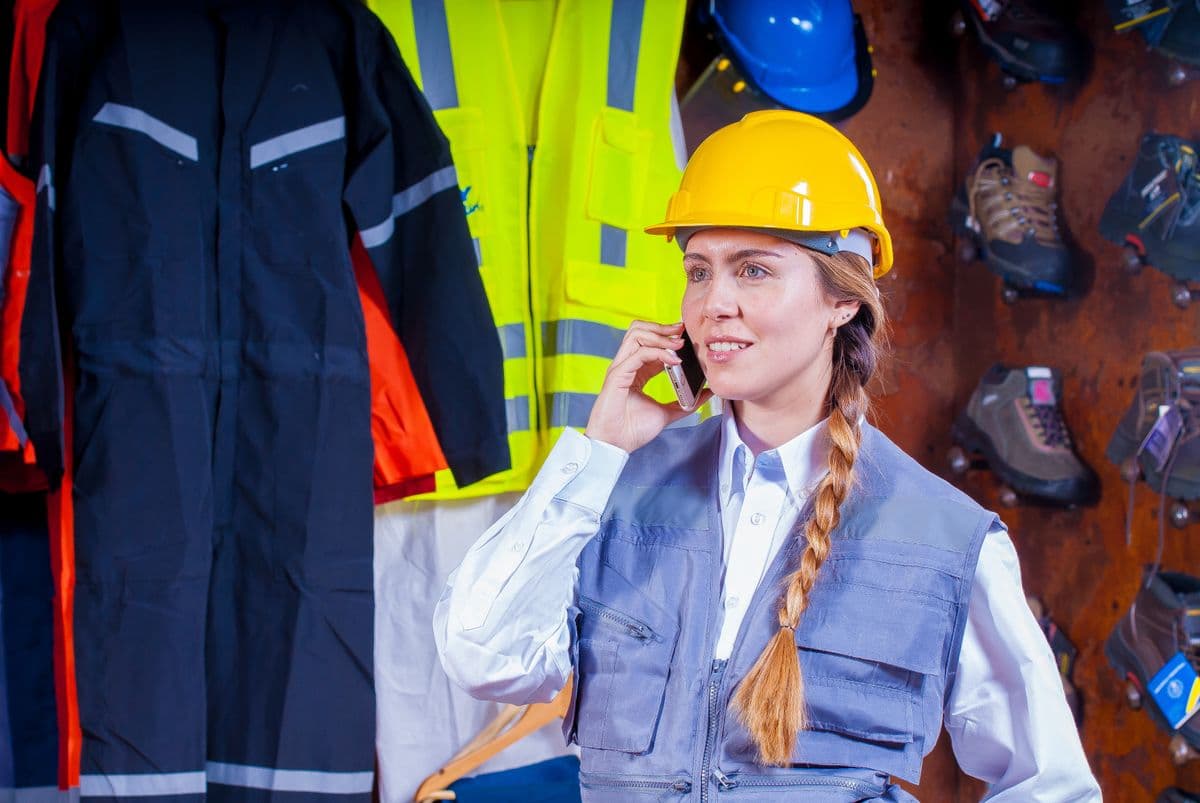
High-visibility workwear is a technical product where the visual result is the safety function, so it is specified against a standard rather than a colour. We produce high-visibility waistcoats, jackets, trousers, coveralls, shirts and polos in fluorescent yellow, orange-red and red base fabrics with retro-reflective tape applied in the configuration required by the class of protection being targeted, including two-band, twin-band, brace and full-harness patterns.
The performance depends on three things: the fluorescent base fabric's chromaticity and luminance, the retro-reflective tape's coefficient of retro-reflection, and the total visible area of each in the finished garment. All three are affected by washing. We therefore source certified fluorescent fabric and certified reflective tape with valid test evidence, and where a buyer requires conformity to a specific standard such as the EN ISO 20471 family or an equivalent regional standard, we route the order to units that can supply the corresponding certification and test reports rather than approximating the appearance.
Reflective tape application is a construction risk in its own right. Tape must be applied with the correct thread, stitch and needle so the tape body is not perforated in a way that promotes cracking, and it must be positioned to remain continuous and unobstructed around the body. Tape performance after repeated washing is tested where the standard requires it, and we specify sew-on rather than heat-transfer tape for garments facing industrial laundering.
Where a garment is genuinely personal protective equipment, we are explicit about what we can and cannot supply. We can produce and supply certified high-visibility garments and source certified flame-resistant fabrics with valid documentation. We do not present an uncertified garment as compliant, and we will tell a buyer plainly when a target price is not achievable with certified materials, because in this category the alternative is a garment that fails when it matters.
Sizing, fit and wearer comfort
Workwear sizing has to accommodate a wider range of bodies than fashion sizing, with the added requirement that the garment must not restrict movement or catch on equipment. We produce to alpha sizing from S to 6XL and to numeric chest, waist and inseam sizing, with regular, short and tall leg options and independent grading rather than proportional scaling. Coverall grading accounts for the combined torso and leg relationship, which is where a scaled coverall usually fails.
Mobility features are specified deliberately: action backs and pleated shoulders on jackets and coveralls, gusseted crotches, articulated knees, elasticated or expandable waistbands, and bi-swing backs where reach is important. These features add cost, so we quote them separately and let the buyer decide against the work being done. For a seated driver uniform, the priorities differ from those for an overhead maintenance coverall, and the specification should reflect that.
Size sets are approved before bulk on every new block, and where the programme is for a named workforce we can produce to a size roster, packing per individual or per department with name labelling applied. Fit samples are washed at industrial parameters before measurement so the approved dimensions represent the garment after the laundry, not before it.
Branding, uniform programmes and replenishment
Almost all workwear ships branded. We apply embroidered logos on chest, sleeve and back positions, screen and transfer printing including durable heat-transfer for industrial laundering, woven and printed name badges, department and role identification, reflective printed branding on high-visibility garments, and contrast panelling in corporate colours. Branding placement and size are approved on a physical sample, and durability through the intended wash cycle is tested rather than assumed.
Uniform programmes are usually multi-garment and multi-department, and they benefit from being planned as a system: a shared fabric and colour across garment types, consistent branding placement, a documented size roster and a replenishment schedule. We hold the specification, approved trims and branding artwork on file so replenishment orders match the original garments already in service, which matters when a workforce is wearing both generations at once.
For contract buyers, we can plan phased deliveries against a call-off schedule rather than shipping the full quantity at once, subject to an agreed total commitment. That reduces the buyer's storage burden and keeps the specification stable across the contract. Where a fabric lot changes between deliveries, we tell you, because a slight shade difference between two production lots is visible when both are worn on the same site.
Quality assurance, testing and documentation
Workwear inspection focuses on the features that determine service life. Beyond standard construction and measurement checks, we verify bar-tack presence and placement against the specification, stitch density on load-bearing seams, reinforcement panel and gusset construction, pocket bag fabric and depth, closure function under load, reflective tape continuity and stitching, and branding adhesion and placement. Metal-fragment detection is run on garments with metal hardware.
Testing is specified against service conditions. Typical scope covers tensile and tear strength, abrasion resistance, seam strength and slippage, dimensional change after repeated industrial washing, colour fastness to washing, rubbing and light, and where relevant retro-reflective performance before and after washing, water and oil repellency, anti-static performance and flame-resistance testing on certified fabrics. Reports are issued with the shipment and retained against the specification.
Final inspection uses an AQL 2.5 sampling plan as standard, with tighter levels for safety garments where the buyer requests them. Because workwear contracts often carry acceptance criteria written into the tender, we ask for the tender's technical schedule at the quotation stage and align our inspection and test scope to it, rather than delivering to a general standard and discovering a mismatch at acceptance.
Sourcing workwear through VP Global Exim
Workwear buyers value predictability above almost everything else, and predictability comes from a fixed, documented specification produced by a unit that is genuinely set up for heavy fabric and reinforced construction. We place workwear with units equipped for bottom-weight and industrial sewing rather than with fashion lines, which is the single most important sourcing decision in this category.
As a merchant exporter we handle the whole order under one contract: multiple garment types, consolidated inspection, one shipment, one documentation set, and export paperwork including commercial invoice, packing list, certificate of origin, inspection and test certificates, and any market-specific certification your customs authority or tender requires. Shipping is quoted FOB, CIF or CFR by sea, with air freight available where a contract start date is at risk.
To quote, send your garment list with quantities, fabric preference or target weight, the standard or tender schedule you must meet, branding requirements, size roster or size breakdown, and destination market. If you have a current garment you want matched or improved, send it - reverse engineering a workwear garment is straightforward and gives you a directly comparable counter sample before you commit.
Workwear specifications
| Product range | Coveralls, boiler suits, bib and brace, work trousers, jackets, shirts, polos, hi-vis, aprons |
|---|---|
| Fabrics | Cotton drill and twill, poly-cotton 65/35 and 80/20, canvas, duck, ripstop; 190-320+ GSM |
| Finishes | Water and oil repellent, soil release, anti-static, mechanical stretch; certified FR fabric on request |
| Reinforcement | Bar tacks at all stress points, double and safety-stitched seams, gussets, knee and elbow layers |
| Hi-vis | Certified fluorescent base fabric with certified retro-reflective tape in specified band configurations |
| Size range | S-6XL alpha; numeric chest, waist and inseam; regular, short and tall options |
| Testing | Tensile, tear, abrasion, seam strength, industrial-wash dimensional change, fastness, retro-reflective performance |
| Inspection | AQL 2.5 as standard; tighter levels on safety garments on request |
| MOQ | 500 pieces per style and colour; uniform programmes assessed across the full garment list |
| Lead time | 45-70 days from approved pre-production sample and size set; phased call-off delivery available |
Made to your requirements
- Logo embroidery, printing and durable heat transfer
- Corporate colour panelling and department identification
- Reinforcement and pocket configuration to the task
- Certified high-visibility configurations by protection class
- Size rosters with per-wearer packing and labelling
- Phased call-off deliveries against a contract commitment
Where our workwear is used
Typical buyer profiles and end uses we supply into.
Workwear export questions
The questions buyers ask most often before placing a first order.
Can you supply certified high-visibility workwear?
Yes. We source certified fluorescent base fabric and certified retro-reflective tape with valid test evidence, and route orders to units able to supply certification against the standard you name, such as the EN ISO 20471 family or a regional equivalent. We will not present an uncertified garment as compliant, and we will say plainly if a target price is not achievable with certified materials.
Should I choose poly-cotton or pure cotton workwear?
Poly-cotton in 65/35 or 80/20 gives better dimensional stability, faster drying, stronger colour retention through industrial laundering and lower cost, which is why it dominates contract workwear. Cotton-rich fabrics breathe better in high heat but shrink more and fade faster. Where the work involves heat or sparks, synthetic content becomes a safety question and we will advise accordingly.
Is your durability testing done at industrial wash parameters?
Yes, where the garment will be industrially laundered. Testing dimensional change and colour fastness at domestic wash parameters tells you very little about a garment facing 60 or 75 degree industrial cycles with alkaline detergent, so we specify testing at the actual service condition, including retro-reflective performance after washing on high-visibility garments.
Can you produce a multi-department uniform programme?
Yes. We plan multi-garment programmes as a system with shared fabric and colour, consistent branding placement and a documented size roster, then hold the specification and artwork on file so replenishment orders match garments already in service. Packing can be per department, per site or per individual wearer with name labelling applied.
Do you support phased deliveries against a contract?
Yes. Against an agreed total commitment we can plan call-off deliveries rather than shipping everything at once, which reduces your storage burden and keeps the specification fixed across the contract. Where a fabric lot changes between deliveries we tell you, since a shade difference between lots is visible when both generations are worn on one site.
Can you match a workwear garment we already use?
Yes, and it is the most reliable way to start. Send the current garment and we will analyse the fabric weight, blend and finish, document the construction and reinforcement, take off and grade the pattern, and produce a counter sample you can compare directly against the original before committing to bulk.
Request a quote: Workwear
Send your specification, quantity and destination market. We confirm feasibility, quote with a lead time and propose a sampling plan so your first order is judged on an approved sample.
- Response within 24 hours
- Samples before bulk commitment
- Full export documentation handled
Enquire about Workwear
Pre-filled for this product - just add your details.